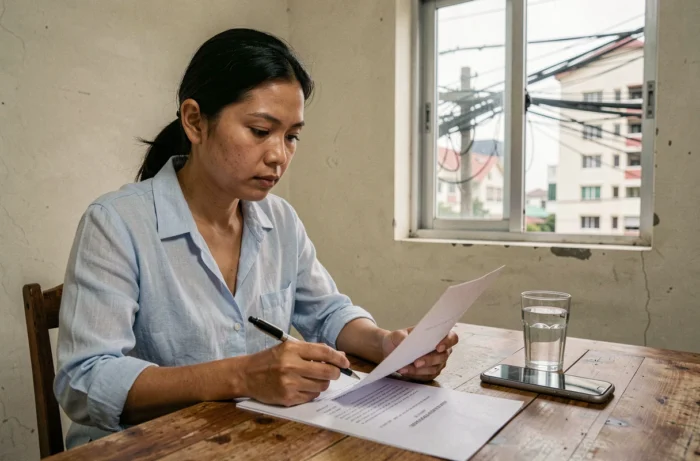
You found a condo in Bangkok on Facebook or Line for a very attractive rent. The owner asks you for a quick transfer to “reserve” it. Three days later, the account has disappeared and the accommodation never existed. This scenario affects expatriates and long-term travelers every year who discover too late the mechanisms of rental fraud in the Thai capital.
Immediate eviction clause in the lease: the warning sign that few tenants notice
Before even discussing price or neighborhood, open the contract. A mention allowing the owner to reclaim the property without notice or judicial procedure is a risk marker. Under Thai law, a landlord cannot evict a tenant by changing the locks or cutting off the electricity on their own initiative.
A written notification is required, and in case of dispute, only a court decision allows for the reclaiming of the property. If the contract states otherwise, you are facing a landlord who relies on your ignorance of the legal framework, or a completely fabricated listing.
Before signing anything, many French-speaking expatriates take the time to rent in Bangkok on Sur Le Toit to cross-check common practices and identify abusive clauses.
A lease written only in Thai, without an English version or translation, complicates verification even further. Always request a bilingual contract. A categorical refusal from the owner on this point is a second clear signal.
Security deposit in Bangkok: rules depending on the number of properties owned by the landlord
The amount of the deposit varies, but the question to ask is not “how much?”. It’s rather: “who is renting me this property?”
In Thailand, landlords operating at least five residential properties are subject to specific consumer protection rules. These rules govern the security deposit, increases on water and electricity bills, and the conditions for return at the end of the lease.
An individual renting a single condo is not subject to the same obligations. The difference is concrete: in the first case, you can contest an abusive retention with the Office of the Consumer Protection Board. In the second, your recourse is more limited.
What to check before paying
- The identity of the landlord: request a copy of the Thai ID card or Chanote (title deed) and compare the name with that on the lease.
- The payment method: a bank transfer with a written receipt protects better than cash payment. An owner who demands cash without a receipt is trying to avoid any traceability.
- The number of properties managed by the landlord: if it’s a company or a multi-property owner, consumer protections likely apply, which strengthens your position.
Short-term rental in Bangkok: the trap of hotel legislation
Are you planning a stay of two or three weeks and find a furnished apartment on an online platform? Check a point that most listings do not mention.
Rentals of less than 30 days may fall under hotel legislation, rather than a simple residential lease. In practice, this means that the building must allow short-term stays and that the property must be operated with a specific license.
Without this authorization, the condominium can interrupt your stay overnight. You then lose your deposit, and the “owner” disappears without any obligation to refund since the contract was based on unauthorized activity.
How to distinguish a legal rental
Ask the condominium’s legal advisor (the “niti,” the building management person) directly: is the property registered for short-term rental? If the answer is evasive or if you are referred back to the owner without written confirmation, move on.
Fraudulent listings on Facebook and Line: recurring mechanics
The most commonly used platforms for housing searches in Bangkok are also those where moderation remains the weakest. Facebook Marketplace and Line groups are full of listings with stolen photos, abnormally low prices, and profiles created just days before posting.
A price significantly lower than the market for a central neighborhood is almost always a lure. The classic scheme: you are asked for a quick reservation deposit, often a few thousand baht, via a transfer to a personal account. No visit is offered before payment.
- Compare the listed price with references on recognized local agency websites. A difference of more than a third compared to neighboring listings for a similar property should raise alarms.
- Conduct a reverse image search of the listing photos: if they appear on other sites or in other cities, the listing is fraudulent.
- Never send money before you have visited the property in person and verified the landlord’s identity with an official document.
Always visit the property in person before any payment. This basic rule remains the most reliable protection, even against sophisticated scams where the owner presents fake documents.
The majority of scammed tenants in Bangkok share a common point: they paid remotely, under pressure, for a property they had never seen. Taking the time to travel, meet the landlord on-site, and check the lease before signing remains the most effective filter against rental fraud.