
Creative kits and hands-on activities for children are no longer just about a tube of glue and a pair of scissors. The European regulatory framework governing these products has tightened, family expectations are shifting towards more customizable formats, and the materials available on the market are increasingly segmented by age group. We take stock of the technical angles that usual idea lists overlook.
Safety of creative kits: what the new European toy regulation changes
The European toy safety framework has evolved significantly. Creative kits and games intended for children under 14 years old are directly affected. The new requirements focus on several simultaneous axes.
- Chemical substances and enhanced traceability: manufacturers will need to integrate more compliance information, including data accessible online. The implementation timeline is gradual, with not all obligations coming into effect at the same time.
- Connected toys (interactive drawing tablets, creative coding kits) will need to meet cybersecurity and privacy protection requirements, an area absent from the previous directive.
- The monitoring of small parts, magnets, and button batteries remains a major practical concern. Recent recommendations emphasize strict age appropriateness and inspection of detachable parts before each use.
The CE marking alone is not enough to guarantee the absence of risk. We recommend prioritizing suppliers who publish their test reports.
Specialized resources like those published on enfantsterribles.fr allow for tracking trends while maintaining a critical eye on the quality of products offered to children.
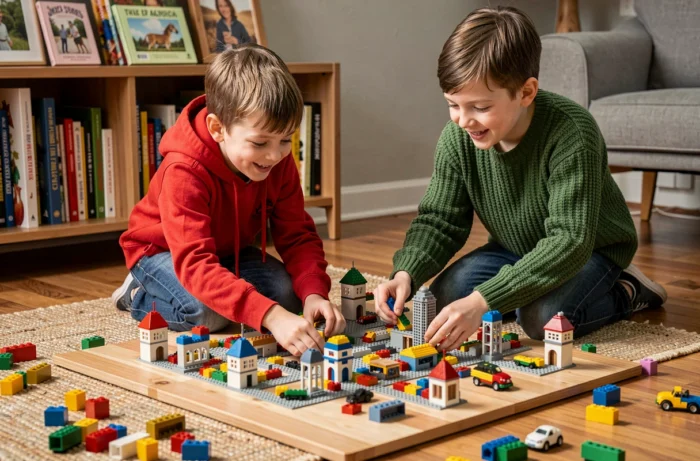
Creative activities for children: choosing materials by age group
A creative leisure kit designed for a 4-year-old is nothing like one intended for a 9-year-old, and not just because of difficulty. Fine motor skills, tolerance for frustration, and concentration ability influence the choice of materials much more than the theme of the activity.
Before 6 years: priority to sensory manipulation
Modeling clay, finger painting, tearing and gluing paper. The action takes precedence over the result. The materials must be washable, non-toxic, and especially composed of pieces large enough to eliminate any risk of ingestion.
Triangular colored pencils facilitate grip. Caps that prevent the tip from sinking into the paper help extend the life of a drawing session.
From 6 to 10 years: introducing technical constraints
This is the age range where a child can follow a pattern, measure, and cut with precision. Simplified macramé, sewing on perforated cardboard, or observational drawing work well. Guided DIY with a tangible result maintains motivation for sessions lasting 30 to 45 minutes.
Commercially available creative leisure kits often target this age group. We observe that kits including an illustrated instruction booklet generate less abandonment than those directing to an online video.
Creative trends 2026: personalization and shared parent-child activities
Families are turning towards more active, customizable, and shared activities. The model of printed coloring does not disappear, but coexists with formats where the child co-designs the project.
Personalization is becoming a key purchasing criterion. Kits that offer multiple variants of execution (color choices, interchangeable patterns, adjustable difficulty levels) capture attention better than a single model to replicate.

Art from recycling and ecological constraints
Crafting from everyday objects (rolls, caps, fabric scraps) is not new, but it is becoming more structured. Technical sheets circulate with precise material lists, estimated completion times, and difficulty levels.
This approach has a concrete educational advantage: it forces the child to solve a design problem with limited resources, which stimulates creativity much more than a pre-cut kit.
Halloween, Christmas, and seasonal activities: anticipating materials
Peaks in searches for creative activities follow the school calendar and holidays. Halloween generates strong demand for cutting, painting pumpkins, and homemade costumes.
Buying creative materials several weeks before the targeted period avoids stockouts on the most requested items (fabric paint, black and orange crepe paper, molding accessories).
Implementation tips for effective creative sessions
A creative leisure session that falls short rarely stems from a lack of ideas. It often results from poor material preparation or a mismatch between the project and the child’s abilities.
- Prepare all materials before starting the activity. Lay out the tools, protect the surface, pre-cut complex pieces for younger children.
- Limit the color choices to five or six maximum. Too many options paralyze decision-making in children under 7 years old.
- Plan a realistic duration: around twenty minutes for 3-5 year-olds, up to 45 minutes for 8-10 year-olds. Beyond that, attention quality drops.
- Accept that the process matters more than the finished result. A parent who constantly corrects stifles creative momentum.
Renewing ideas also involves staying informed. Specialized accounts on social media offer short tutorials, but we recommend always checking the suitability of the project with the child’s actual age before diving in.
The market for creative activities for children is professionalizing, between stricter regulatory requirements and more precise parental expectations. Choosing a kit or designing a home session now requires balancing three parameters: the safety of the materials, the child’s age, and the realistic duration of the activity. Three simple criteria that make the difference between a successful creative moment and a box of unused supplies at the back of a closet.