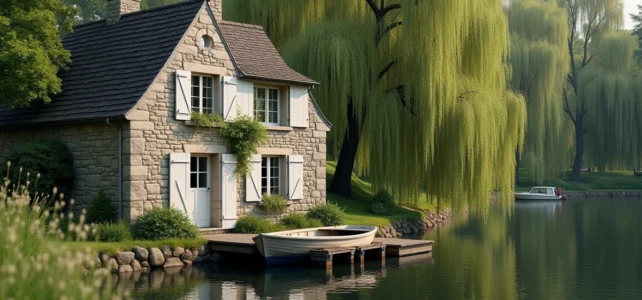
Searching for a house by the water near Paris naturally points towards the Normandy or Brittany coast. Prices remain high there as soon as a usable beach comes into play. Another avenue, rarely compared in search results, deserves to be measured: properties located along rivers, canals, and bodies of water in Île-de-France and neighboring departments. What price differences exist between these two markets, and what hidden costs skew the comparison?
Insurance surcharge and flood zone: the invisible cost of waterfront properties
Before comparing locations, a significant budget item weighs heavily on homes near the water, regardless of the area. Properties located in flood zones can incur a home insurance surcharge that significantly increases the annual bill.
This additional cost can negate the advantage of a low purchase price. A house listed at an attractive price by a river or canal loses some of its appeal if the insurer applies a recurring surcharge. Therefore, it is essential to consult the Flood Risk Prevention Plan (PPRI) of the municipality before any visit.
For buyers targeting a cheap waterfront house near Paris, this verification serves as a primary filter. A property outside a flood zone but close to a watercourse remains possible in several areas of Île-de-France.

Île-de-France rivers and canals vs. Normandy coast: comparative table
The coastline accessible from Paris focuses on a few fronts: Manche, Seine-Maritime, Calvados, Somme. The riverbanks, on the other hand, cover a much wider area, from the Oise valley to the Loing valley, passing through the banks of the Marne and the Yonne.
| Criterion | Rivers/canals (1.5-hour radius from Paris) | Coastline (Manche, Somme, Seine-Maritime) |
|---|---|---|
| Average price per m² | Significantly lower than the coastal average | Variable, some municipalities under 2,000 euros/m² (Manche, Somme) |
| Travel time from Paris | 45 min to 1.5 hours by car or train | 2 to 3 hours by car, sometimes more by train |
| Flood risk | Frequent in valley bottoms, PPRI verification mandatory | Marine submersion possible depending on the area |
| Specific diagnostics | Lead diagnosis mandatory (houses built before 1949), common in old riverside buildings | Same for old coastal buildings |
| Weekend/residence use | Main or secondary residence, short commutes | More likely secondary residence or seasonal rental investment |
The price gap per square meter between a riverbank in the Oise valley and a coastal municipality in Manche often exceeds several hundred euros. For the same surface area, the total purchase budget by the river remains lower in the vast majority of cases.
Cheapest coastal municipalities accessible from Paris
Some coastal municipalities have prices below 2,000 euros/m² according to available data for 2026. Manche (Sainte-Mère-Église), Somme (Woignarue, Mers-les-Bains), Pas-de-Calais (Boulogne-sur-Mer), and Finistère (Ploéven, Plounévez-Lochrist) are among the most affordable areas of the French coastline.
However, these municipalities are located more than two hours’ drive from Paris. For frequent weekend use, the journey represents a real constraint that the low price does not always compensate for.
Riverbank near Paris: areas to watch
The market for riverbank houses does not have a centralized aggregator comparable to coastal portals. It is necessary to cross-reference several sources and target specific geographic areas.
- Oise Valley (Val-d’Oise, Aisne): a river axis with municipalities less than an hour from Paris, where old buildings by the water remain accessible. The flood risk varies greatly from one bank to the other.
- Loing Valley (Seine-et-Marne, Loiret): a sought-after area for its natural setting, with houses near the Loing canal. Prices remain contained compared to Fontainebleau, which is nearby.
- Marne Banks (Seine-et-Marne, Aisne): several municipalities along the Marne offer properties with views or access to the watercourse, at prices lower than the average Île-de-France market.
- Yonne Valley (Yonne, south of Île-de-France): a more distant area but still within a 1.5-hour radius, where prices per square meter are among the lowest around Paris.
In each of these areas, the lead diagnosis remains mandatory for houses built before 1949, a common case in old riverside villages. This diagnosis adds to other legal obligations before sale and may reveal compliance work that needs to be budgeted.
Barge and floating habitat: a niche alternative near Paris
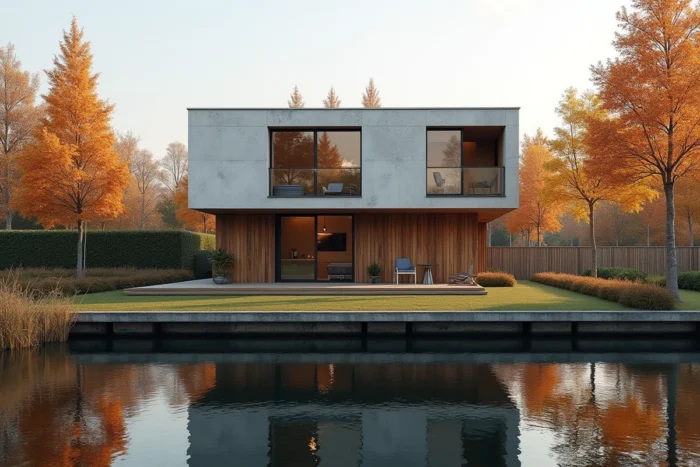
Floating habitat represents a distinct option for living by the water near the capital. Testimonials from barge owners in Paris confirm that this lifestyle attracts a growing audience, charmed by the setting and central locations.
The purchase price of a fitted barge varies significantly depending on size, condition, and location. Additional costs (mooring fee, hull maintenance, connections) constitute a recurring budget that the buyer must factor in. Floating habitat is not a shortcut to low prices, but it offers a waterfront location that the traditional real estate market cannot provide in the same area.
Diagnostics and regulatory constraints before purchasing waterfront property
Any buyer of an old property near the water should anticipate a diagnostic file thicker than average. Three points deserve special attention:
- The lead diagnosis (CREP) is mandatory for properties with a building permit dated before 1949. Old riverside houses are often affected.
- The state of natural and technological risks (ERNT) includes flood risk. This document conditions the transparency of the sale and the insurability of the property.
- Easements related to watercourses (right of way, bank maintenance) may limit the use of the land directly bordering the water.
These constraints do not make purchasing impossible, but they increase the overall cost. A property listed at a low price in a flood zone with a positive lead diagnosis may ultimately cost as much as a better-located house once the work and surcharges are factored in. The purchase price alone is not enough to compare two waterfront properties: it is the total cost over five years (acquisition, work, insurance, diagnostics) that distinguishes the opportunities.