The senior volunteering refers to all forms of solidarity engagement accessible to retired individuals or those nearing retirement, both in France and abroad. This term encompasses both local associative volunteering and international missions governed by a international solidarity volunteering contract (VSI).
According to the France Bénévolat-IFOP barometer published in March 2025, the volunteering rate among those over 65 has dropped to 24% in 2025, down from 38% in 2010. The pool of available retirees remains large, but the reality of their participation has changed.
Decline in senior volunteering: what the 2025 data reveals
The decrease in associative engagement among retirees does not indicate a lack of interest in solidarity. It reflects a transformation in expectations. The 2025 barometer data shows that associative volunteering has not returned to its pre-pandemic level, across all age groups. Among seniors, this trend is compounded by a generational factor: today’s retirees seek more flexible formats than weekly engagement in a single organization.
Occasional missions, interventions lasting a few weeks, or seasonal projects are gaining ground. Associations must adapt their offerings to recruit volunteers who refuse a rigid schedule. This shift towards flexibility does not diminish the value of engagement, but it requires rethinking how solidarity missions are designed and proposed. Platforms like seniors-en-mission.org facilitate this connection between retirees and organizations that need specific skills for defined durations.
Solidarity missions in France: what concrete formats for retirees
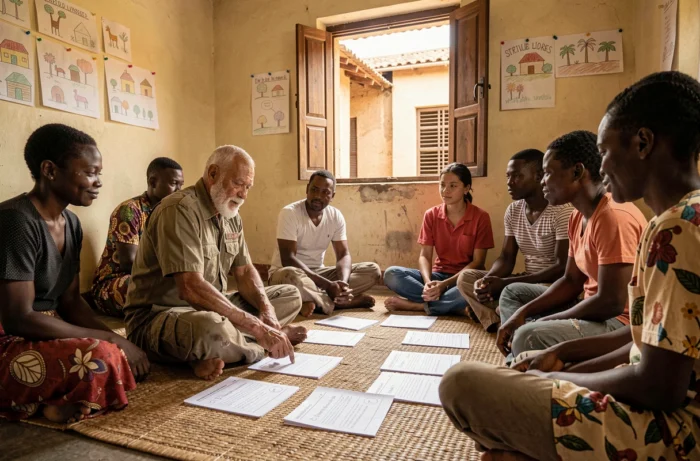
In France, retirees mainly engage in three areas: social support, transmission of professional skills, and logistical support to associations.
- Social support includes tutoring, home visits to isolated individuals, administrative assistance, or literacy programs. These missions require relational qualities and patience that organizations actively seek in seniors.
- The transmission of skills involves working in specific technical fields (management, accounting, IT, crafts) with small associations or project leaders. Organizations like ECTI organize this type of mission in France and Europe, leveraging the professional expertise of retirees.
- Logistical support covers event organization, food collection, transportation of vulnerable individuals, or stock management in local branches of large charitable organizations.
The common point among these formats: the most requested missions rely on identified professional expertise. A former accountant managing the finances of an association or a former teacher leading a reading workshop brings a value that younger volunteers may not always possess.
International volunteering after 60: legal framework and social protection
Going on a solidarity mission abroad after retirement is not just a simple humanitarian trip. When the mission lasts more than a few weeks, the international solidarity volunteering contract (VSI) serves as the legal framework. This contract, established by the law of February 23, 2005, can be concluded without an upper age limit.
The VSI offers protection that informal volunteering does not guarantee. The sending organization covers supplementary health insurance, civil liability, and medical repatriation. A monthly allowance is paid to the volunteer, and a reintegration allowance may be provided upon return.
Duration and mission conditions
A VSI lasts between one and six years at most, with possible renewals. In practice, many seniors prefer missions lasting three to twelve months. The most sought-after fields internationally are health, education, vocational training, and project management.
The absence of an age limit for the VSI distinguishes this system from civic service, which is reserved for those aged 16-25 (30 years for individuals with disabilities). Retirees thus gain access to a protective legal status, with social rights maintained throughout the duration of the mission.
Skills sought in the field in Africa and developing countries
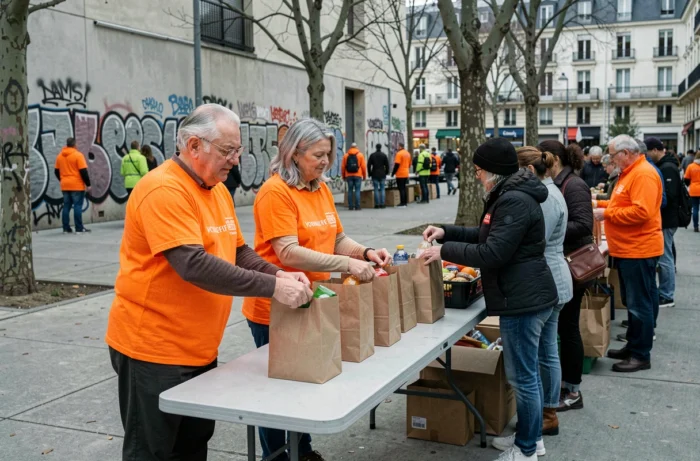
Solidarity projects in sub-Saharan Africa, Southeast Asia, or Latin America are not lacking in manpower. What they lack are experienced profiles capable of structuring long-term action. A former hospital executive training local caregivers in managing a clinic brings more than a group of young volunteers present for two weeks.
The three most sought-after skill sets are:
- The medical and paramedical sector: training in first aid, support for healthcare structures, health awareness in rural communities.
- Teaching and training: language courses, pedagogical support for local teachers, implementation of vocational training programs adapted to the local economic fabric.
- Project management: preparing funding applications, associative accounting, administrative structuring of local organizations struggling to professionalize.
This logic of knowledge transfer distinguishes senior volunteering from voluntourism, where the presence of the volunteer benefits themselves more than the host communities. Serious associations select candidates based on their actual skills, not on their stated motivation.
Occasional engagement or long-term mission: choose according to your situation
Not all retirees can spend six months in Senegal. Health constraints, family obligations, or budget limitations often restrict the range of possibilities. An effective solidarity engagement does not require crossing an ocean. A two-hour weekly mission in a local solidarity grocery store requires the same qualities of listening and rigor as an international project.
The choice between occasional missions and long-term engagement depends on three factors: actual availability (not what one imagines before starting), transferable skills in the field, and the ability to adapt to an environment that may be far removed from one’s daily life. Serious sending organizations offer a preparation seminar before departure, specifically to verify the alignment between the volunteer’s profile and the project’s needs.
The decline in regular volunteering among seniors does not mean that this generation is turning its back on solidarity. Retirees who engage today do so with specific expectations: a clear framework, a defined mission in time, and the certainty that their skills will be genuinely utilized. Associations that meet these criteria have no trouble mobilizing experienced volunteers.