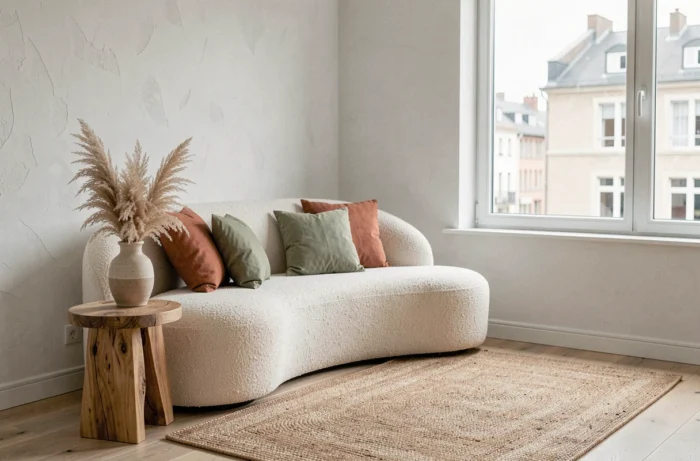
The interior decoration market is undergoing a silent transformation. French households are breaking down their projects, balancing between technique and aesthetics, and examining more closely the composition of the products they place in their homes.
According to Le Figaro (article from September 8, 2026), interior paints and coatings have increased by 9%, while the plumbing-bathroom-kitchen segment has decreased by 5.1%. This year’s decor trends are therefore not limited to a color palette: they reflect more structural choices, where air quality, reuse, and coordination with renovation work weigh as heavily as visual appeal.
VOC Labeling and Decoration: A Concrete Criterion
Since September 1, 2013, construction and decoration products sold in France carry a labeling system ranging from A+ to C based on their volatile organic compound emissions. This requirement covers paints, coatings, floor coverings, and new furniture.
In practice, this labeling changes decision-making. Choosing a matte terracotta paint or a golden sand coating is no longer just about the shade: the VOC emission class determines the air quality of the living room or bedroom. Recent recommendations encourage comparing color, finish, and emission level before purchase, especially in poorly ventilated rooms.
For new furniture, the logic is the same. A particle board piece classified as C emits significantly more than a solid wood piece or a second-hand item whose emissions have dissipated over time. This observation directly feeds into the next trend.
Finding decor trends on News Déco allows one to measure how much these health issues now influence furniture and finishing choices.
Reuse of Furniture and Materials: Beyond Vintage Style
Reuse is no longer just an aesthetic stance inspired by flea markets. It is becoming increasingly operational. Recent developments in the PEMD (Products, Equipment, Materials, and Waste) diagnosis impose finer traceability of components: assembly, exact reference, material location, and reusable portion.
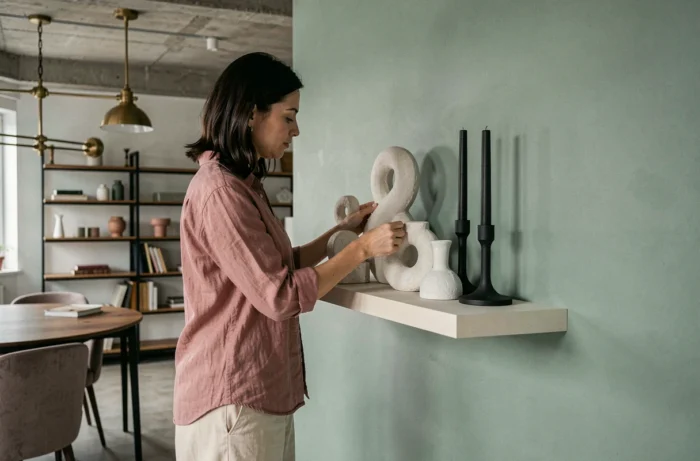
This traceability promotes the use of recovered but documented and reinstallable components. In decoration, this translates into old doors being put back into service, reconditioned industrial lighting, or certified reclaimed wood boards for wall cladding.
Field reports vary on this point: some craftsmen note that the demand for reused parts exceeds the available supply in their geographical area, while others observe a growing stock of materials from recent deconstructions. The sector is structuring, but supply remains uneven across regions.
What Reuse Changes in Room Layout
Integrating second-life furniture or materials into a space requires working with non-standard dimensions. A reclaimed farmhouse table does not fit to the exact centimeter like a custom table. This discrepancy forces a rethink of circulation in the living room or dining room.
Design moves away from the logic of new at all costs, and layouts gain uniqueness. Added pieces create visual breaks that mass-produced furniture does not produce.
Coordination of Renovation and Interior Decoration
Energy renovation aids indirectly modify layout choices. When a household insulates its walls from the inside, it loses a few centimeters in each room. Finishes must then adapt: shallower furniture, recessed lighting rather than hanging, light colors to compensate for the reduction in space.
Coordinating decoration, ventilation, insulation, and heating avoids having to redo the same tasks twice. Applying a decorative coating before installing a double-flow ventilation system, for example, may require redoing the finishes around the extraction vents. The order of interventions is as important as the choice of colors.
- Check the compatibility between the chosen wall coating and the type of insulation installed (permeability, adhesion)
- Anticipate the location of ventilation outlets before fixing the lighting and ceiling decoration plan
- Plan for technical passages behind wall coverings to avoid having to dismantle everything in case of maintenance
Earthy Palettes and Natural Textures: What Holds and What Remains Unclear
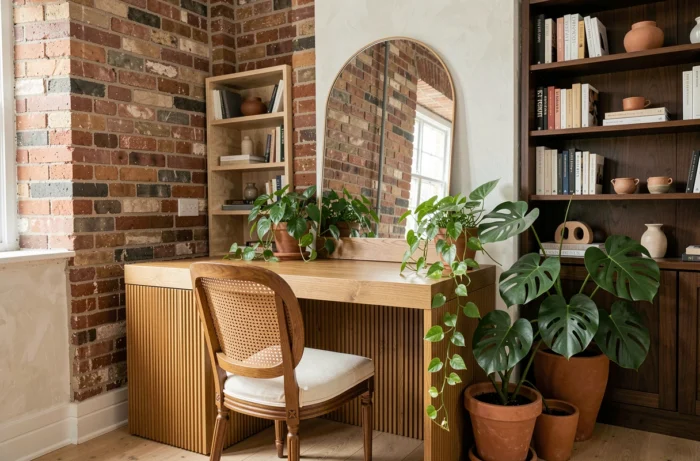
Earthy tones (clay, sand, terracotta) are returning in most projections for this year. Several paint publishers and ceramic flooring manufacturers offer ranges built around these shades. This observation is shared by interior architects interviewed in the specialized press.
However, the available data do not allow for conclusions about the durability of this trend. The color cycles in decoration have accelerated due to social media. According to the Resonate Institute, half of furniture buyers begin their inspiration phase on social media several weeks or even months before the purchase. What emerges on TikTok or Pinterest can saturate quickly.
Textures and Natural Light in the Living Room
Textures are as important as colors in the perception of a space. A lime plaster wall does not reflect light in the same way as a wall painted with acrylic, even in the same shade. The texture of the plaster creates micro-shadows that alter the atmosphere depending on the time of day.
Raw wood, linen, and reconstituted stone complement this search for materials. Their common point: an irregular surface that breaks the monotony of standardized interiors. However, choosing these textures requires checking their VOC labeling, particularly for coatings and surface treatments.
This year’s decorative decisions are less about style than about method. Knowing how to read an emission label, verifying the provenance of a reused piece of furniture, or synchronizing finishes with a renovation project: these reflexes are permanently changing the way interiors are conceived, well beyond a season.