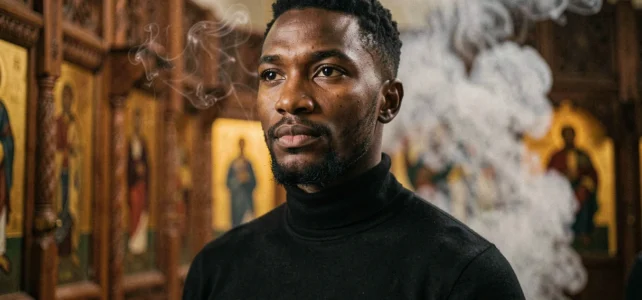
Abel Tesfaye, known as The Weeknd, has never publicly claimed a specific religious affiliation. Available sources point to a spiritual rather than strictly religious stance. This article examines the factual traces of this relationship with faith: family heritage, imagery in the lyrics, and the Canadian singer’s positioning regarding religious labels.
Ethiopian Orthodox Christianity and The Weeknd’s Family Heritage
Most analyses of Abel Tesfaye’s spirituality begin with a rarely disputed fact: his upbringing marked by Ethiopian Orthodox Christianity. His family, of Ethiopian origin, transmitted a religious framework that permeates his early years in Canada.
This Eastern Christian tradition is distinguished by an ancient liturgy, frequent fasting, and a highly codified iconography. These visual and ritual elements are found in the singer’s artistic universe, even when thematically distanced from them.
For those wondering what The Weeknd’s religion is, the most documented answer refers to this Ethiopian Orthodox grounding, without the artist making it an active profession of faith in his public life.
Religious Imagery in Tesfaye’s Albums and Lyrics
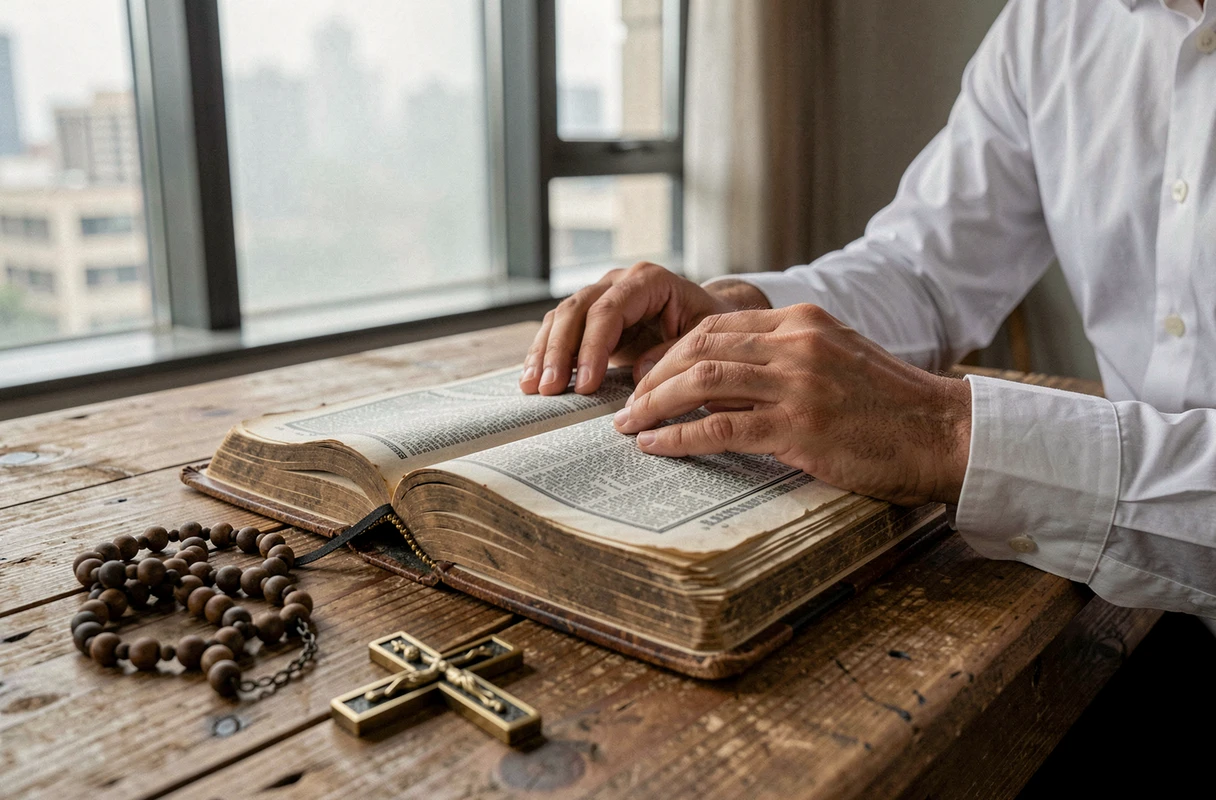
The singer’s work mobilizes a dense religious vocabulary. Sin, redemption, forgiveness, spiritual doubt: these themes run through his albums without ever constituting a doctrinal message.
Artistic Register or Personal Conviction
The distinction is important. The Weeknd’s lyrics use religion as a narrative register. References to sin or being born again function as metaphors for his own contradictions, between excess and the search for meaning.
This approach fuels speculation. Some fans read his texts as the expression of sincere faith, while others see them as a mere aesthetic tool. The artist has never chosen between these two interpretations.
Recurring Themes by Album
| Religious Theme | Presence in the Work | Function |
|---|---|---|
| Sin and Temptation | Recurring since the early mixtapes | Narrative register, inner conflict |
| Redemption | More recent albums (Starboy, After Hours) | Narrative arc of transformation |
| Spiritual Doubt | Present in several tracks | Personal questioning |
| Imagery of Light/Darkness | Music videos and songs | Visual and thematic contrast |
This table shows that religion functions as a narrative grammar for The Weeknd, not as a catechism. The themes evolve throughout his discography, but they remain in service of the artistic narrative.
Belief in God Without Religious Label: The Weeknd’s Stance
Several sources converge on the same observation: Abel Tesfaye claims to believe in God or a higher power while refusing to be confined to a single religious category. This stance is consistent with his background.
Growing up in an Ethiopian Orthodox family and then immersing himself in Toronto’s music scene, with its R&B, hip-hop, and electronic influences, creates a gap between the received heritage and the constructed identity. The Weeknd occupies this in-between space, and he seems to embrace it.
The “satanist” or “practicing Christian” readings circulating online are not based on any direct statements from the singer. They stem from interpretations of music videos or fan speculation, without solid factual basis.
Online Speculation and Lack of Official Statement
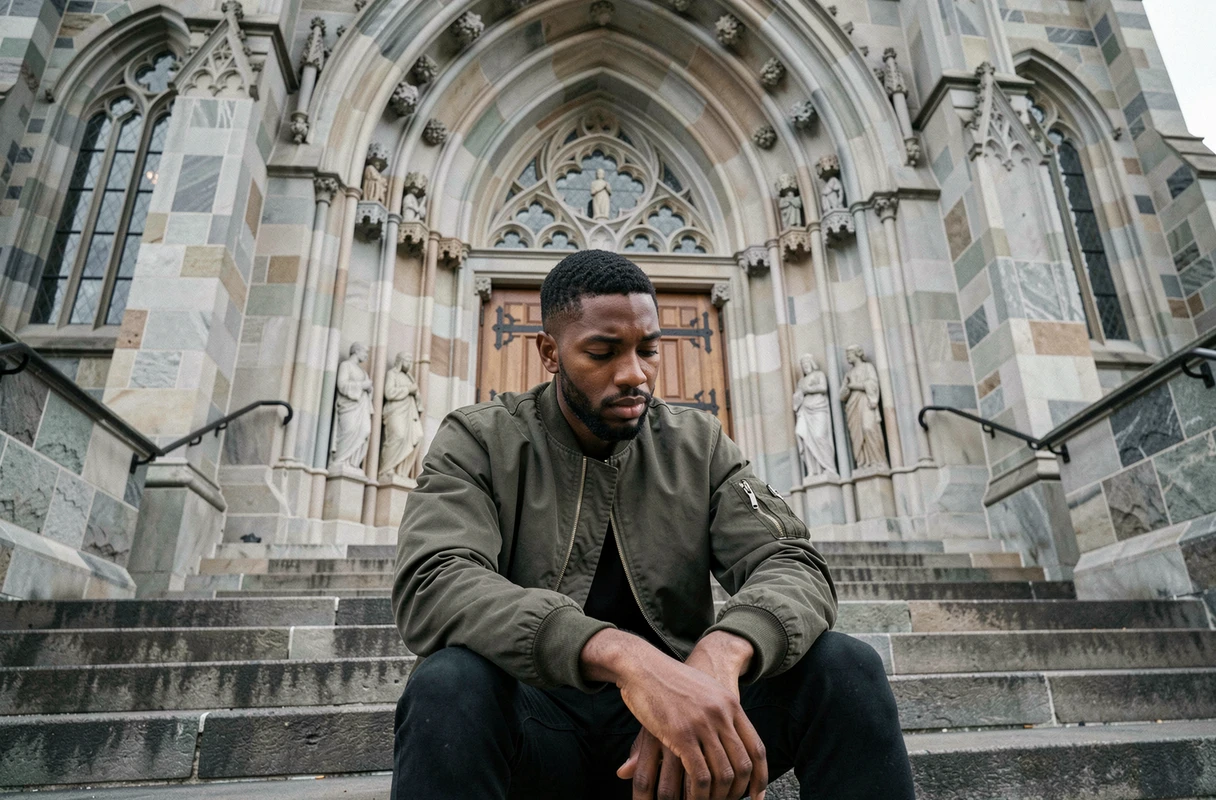
The SERP surrounding The Weeknd’s religion reveals an interesting phenomenon: since the artist has not made a formal statement, the void is filled with contradictory hypotheses.
- Forums attribute satanic tendencies to the Canadian singer, based on the dark aesthetics of some music videos and the staging of House of Balloons or After Hours
- Other sources present him as a discreet believer, relying on fragments of lyrics mentioning God or forgiveness
- A third, more nuanced reading describes him as a spiritual artist who draws from religion without formally adhering to it
None of these interpretations rely on an interview where Tesfaye defines himself. The ambiguity is maintained by the artist, who seems to consider this gray area as a creative space rather than a subject to clarify.
Why the Lack of Response Fuels Debate
In the music industry, many artists clearly display their faith (gospel, contemporary Christian music) or their rejection of the religious. The Weeknd does neither. This absence of a clear stance, combined with a constant use of religious lexicon, mechanically produces speculation.
The result is an artist whose music speaks of God, sin, and redemption, but whose public biography contains no declared religious affiliation. For fans and analysts alike, this tension between the work and the person remains the most documentable fact on the subject.
The most reliable data remains this: Abel Tesfaye grew up in an Ethiopian Orthodox Christian environment, he extensively uses religious imagery in his music, and he has never publicly confirmed belonging to a particular denomination. Everything else falls into the realm of interpretation.