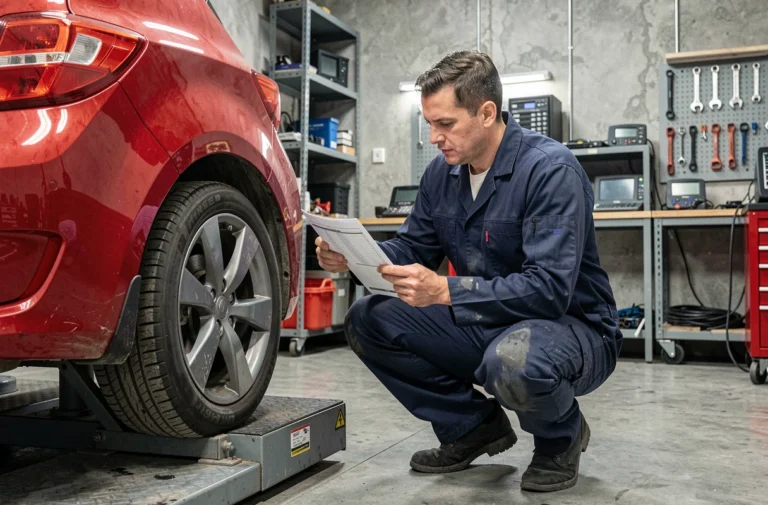
The Toyota Yaris hybrid operates with a powertrain whose instantaneous torque affects the tires differently than a conventional internal combustion engine. Adjusting the pressure to the correct level is not just about reading a label: the tire size, the load carried, and the generation of the vehicle modify the target values.
This article details the recommended pressures by Toyota for each tire size, then analyzes the differences between normal use and full load, before addressing the calibration of the TPMS system specific to the Yaris IV.
Hybrid Torque and Tire Constraints on the Yaris
The electric motor of the Yaris hybrid delivers its maximum torque from the very first turns of the wheels. This characteristic causes more frequent micro-slips compared to a naturally aspirated gasoline engine, especially on wet roads.
An under-inflated tire exacerbates the phenomenon. The contact patch on the ground widens, the sidewalls heat up more, and the rubber loses lateral grip.
The Yaris IV hybrid (from 2020) carries its battery under the rear seat, which slightly alters the weight distribution compared to the thermal version. Toyota compensates for this difference with a pressure differential between the front and rear axles.
For more in-depth information on manufacturer values and specific cases, a comprehensive guide on the tire pressure on the Toyota Yaris hybrid details each configuration size by size.
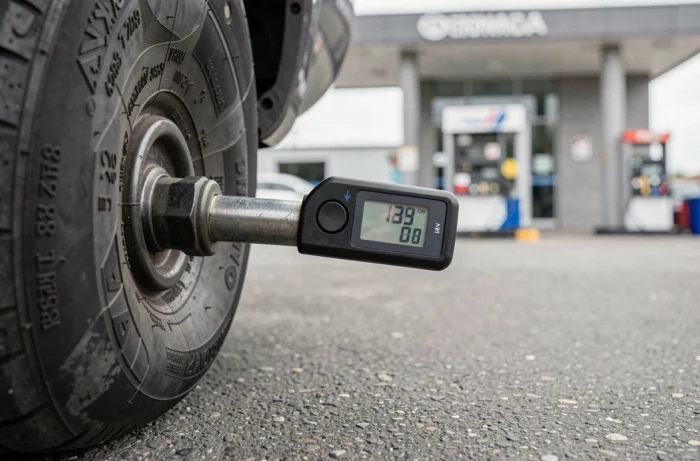
Table of Recommended Pressures by Tire Size
The values below come from the label affixed to the driver’s door frame of the Yaris IV and Yaris Cross hybrids. They are read as cold tires, in bar. The original label is expressed in kPa and psi: dividing the kPa by 100 gives the value in bar.
| Size | Front (bar) | Rear (bar) | Front loaded (bar) | Rear loaded (bar) |
|---|---|---|---|---|
| 205/65 R16 (Cross) | 2.3 | 2.2 | 2.5 | 2.4 |
| 215/55 R17 (Cross) | 2.3 | 2.2 | 2.5 | 2.4 |
| 215/50 R18 (Cross) | 2.3 | 2.2 | 2.5 | 2.4 |
The specific sizes for the Yaris IV (185/65 R15, 195/55 R16, 205/45 R17) are also listed on the door frame label. Refer to this label for the exact values corresponding to your vehicle, as they may vary depending on the engine and trim level.
Difference Between Normal Load and Full Load: What the Numbers Show
On Yaris Cross sizes, the difference between the front and rear axles in normal use is 0.1 bar. When the vehicle is fully loaded, each wheel gains 0.2 bar compared to the standard pressure.
Why Not Ignore Full Load Mode
Four passengers and a full trunk without adjusting the pressure results in relative under-inflation. The braking distance on wet roads significantly increases under these conditions.
Wear then concentrates on the sidewalls, reducing the tire’s lifespan. The reflex to adopt: inflate to the “loaded” value before each long trip with a full vehicle, then return to normal pressure once the load is removed.

TPMS Reset on Yaris IV Hybrid: The Digital Procedure
Older generations of Yaris had a physical button under the steering column to reset the sensors. On the Yaris IV and Yaris Cross hybrid, the procedure is done through the digital display menu.
- Turn on the ignition without starting the engine (set to “ON” on the Start button).
- Access the “Vehicle Settings” menu via the steering wheel controls or the central screen, then select “TPWS” or “Tire Pressure”.
- Confirm the reset, then drive at about 40 km/h for a few minutes for the system to recalibrate the sensors.
If the warning light remains on after this operation, the software is probably not the issue. A faulty TPMS sensor, a damaged valve, or a slow leak are among the most common causes.
TPMS Light On After Correct Inflation
Each wheel is equipped with a direct sensor that measures the pressure in real-time. This sensor operates on a battery, which lasts several years. When the battery runs low, the light turns on regardless of the actual pressure.
Replacement occurs during tire removal. Taking advantage of a seasonal change to check the condition of the sensors avoids a separate intervention and additional labor costs.
Frequency of Checks and Reliable Measurement Conditions
Measurements should be taken when tires are cold, before hitting the road. A few kilometers are enough to skew the reading, as the internal temperature of the tire artificially raises the pressure.
- Prefer a digital gauge for precision to the tenth of a bar, as dial gauges at gas stations are often less reliable.
- Check all four wheels at each inspection, not just those indicated by the TPMS.
- Don’t forget the spare tire if the vehicle is equipped with one (some Yaris trims only come with a repair kit).
Inflating with nitrogen, sometimes offered at dealerships, does not provide measurable benefits for standard road use. Regular compressed air is perfectly suitable for the Yaris hybrid.
A properly inflated tire protects the mechanics, limits consumption, and extends the lifespan of the rubber. The pressure differences between sizes remain small, but neglecting them means sacrificing safety for the efficiency that the hybrid system provides.